Architecture
Every plugin in this marketplace is built from the same small set of building blocks: skills, agents, and (for the tools that reach outside the agent) MCP servers. This page explains what each one is for and when to reach for which.
Plugin anatomy
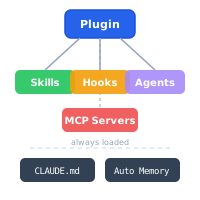
A plugin is a bundle of skills, hooks, agents, and MCP servers, installed alongside the always-loaded project instructions (CLAUDE.md/AGENTS.md) and, in Claude Code, auto memory. This marketplace's plugins mostly ship skills, plus a handful of bundled agents for review/QA surfaces (see project:pr-review-toolkit, grant:grant-review, manuscript:paper-review, figures:figure-qa, and the neuroinformatics BIDS validator).
Anatomy of a skill
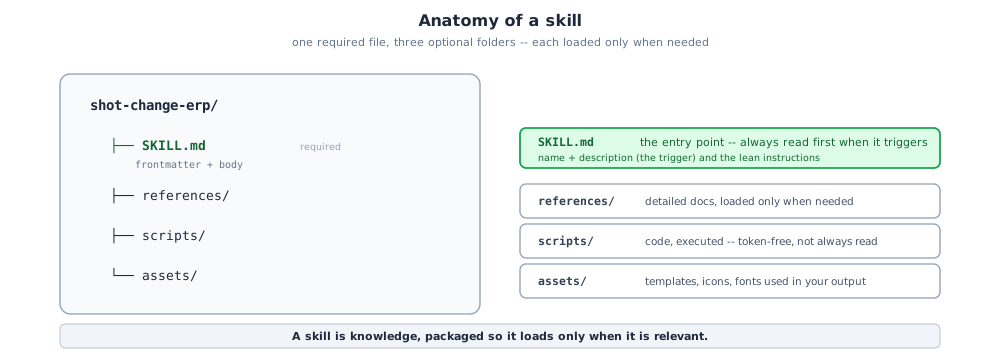
A skill is one required file plus three optional folders, each loaded only when needed:
SKILL.md: the entry point, always read first when the skill triggers. Its frontmatter (name+description) is the trigger; the body is the lean, always-loaded instructions.references/: detailed docs, loaded only when the skill's body points at them.scripts/: code that gets executed, not read; token-free once written.assets/: templates, icons, and fonts used in the skill's output.
In short: a skill is knowledge, packaged so it loads only when it is relevant.
Skill vs. agent
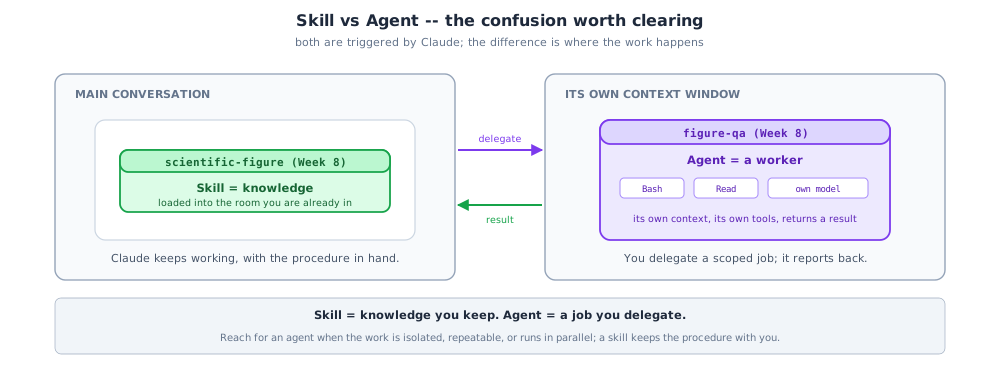
Both are triggered by the agent runtime, but they differ in where the work happens:
- A skill loads knowledge into the conversation you're already in; the model keeps working, with the procedure in hand.
- An agent is a worker with its own context window, its own tools, and (optionally) its own model. You delegate a scoped job to it; it returns a result.
Reach for an agent when the work is isolated, repeatable, or runs in parallel (fan-out reviews, QA passes, background validation). A skill keeps the procedure with you when the work benefits from staying in the main conversation.
Skill vs. MCP
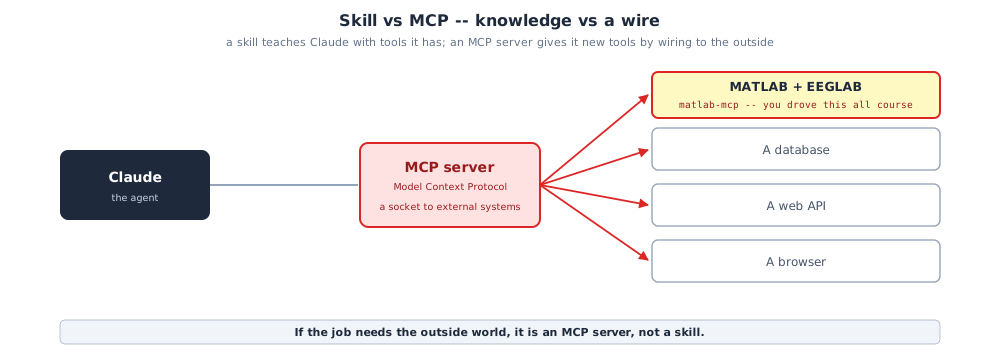
A skill teaches the agent using tools it already has. An MCP (Model Context Protocol) server gives it new tools by wiring to something outside the agent entirely: a database, a web API, a browser, or an external application like MATLAB/EEGLAB. If the job needs to reach the outside world, it's an MCP server's job, not a skill's.
Cross-agent design
Every skill in this marketplace is written once and shared across Claude Code, Codex, and Copilot CLI, with thin per-runtime manifests pointing at the same skills/ trees. See Cross-Agent Compatibility for exactly how each runtime discovers and registers plugins, skills, commands, and agents.
Want to build your own plugin on top of these patterns? The Agentic Research Course week 10, "Building Your Own Plugins," walks through skills, hooks, agents, and MCP integration end to end.